


Diagnostics of fuel tanks
Like other technical devices, tanks go through several stages of inspection before and directly during operation. The first stage is an inspection during production. Then a scheduled diagnosis of fuel tanks is carried out.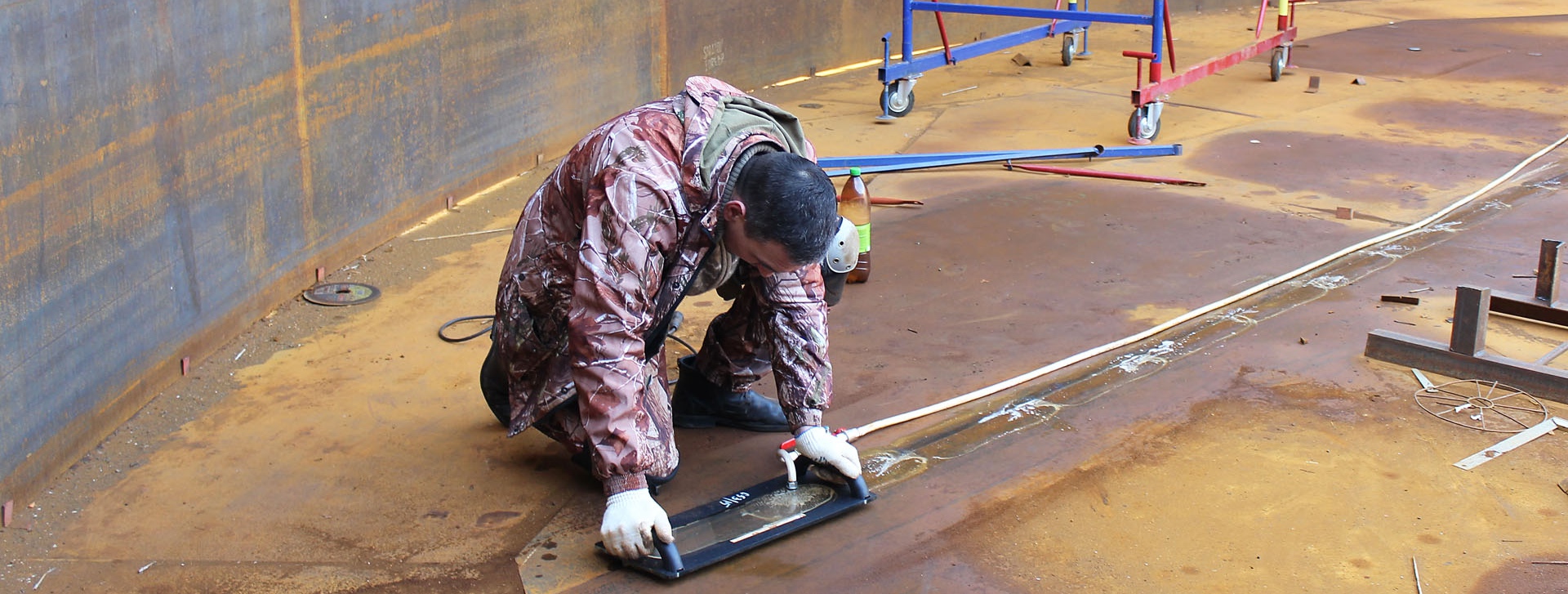
In total, there may be several types of diagnostics, let’s start with partial diagnostics (without decommissioning the tanks), which includes:
- analysis of technical documentation;
- inspection of tanks;
- control (visual and measuring) of walls, roofs, outer edges of bottoms;
- ultrasonic thickness measurement of roof walls, outer edges of bottoms;
- ultrasonic control of welding seams of walls;
- acoustic emission inspection of walls and floors;
- geodetic measurements of tank bodies and protective embankments;
- examination of the external anti-corrosion coating of housings;
- control calculations of tank structures;
- industrial safety examination regarding the obtained results of partial diagnostics.
In addition to the listed operations, full diagnostics of tanks (with decommissioning of tanks) includes:
- control (visual and measuring) of the pontoon;
- ultrasonic thickness measurement of the pontoon;
- ultrasonic control of welding seams of bottoms;
- control of the tightness of floating roofs (pontoons) and bottoms using the vacuum method;
- mechanical tests of metal and determination of its chemical composition;
radiographic control; - examination of the entire anti-corrosion coating of the housings;
- acoustic emission control of walls during hydraulic tests;
- examination of foundations and foundations of tanks;
- industrial safety examination based on the obtained results of full diagnostics of the capacity.
Technological pipelines are also subject to technical diagnosis.


